While the country is still in lockdown, going for a daily walk is one of life’s small pleasures. Stay close to home is the mantra so walks can become very familiar. Lots of wet wintry weather don’t add to the enjoyment much either, until……

A sudden spell of very cold weather. Bitterly cold. Braemar in Scotland recorded a temperature of -23 overnight. Not quite so cold in the Lake District but still very low temperatures at night.
The usually beautiful Stockghyll Falls which are just a short walk from the centre of Ambleside had turned into a frozen beauty overnight.


Meanwhile Ambleside itself was so quiet. As it should be at the moment but when you consider this would normally be the busy school half term week strange to see.


Evenings have produced some nice sky’s at Waterhead Ambleside, and it’s noticeable now how much lighter it is getting in the evening.


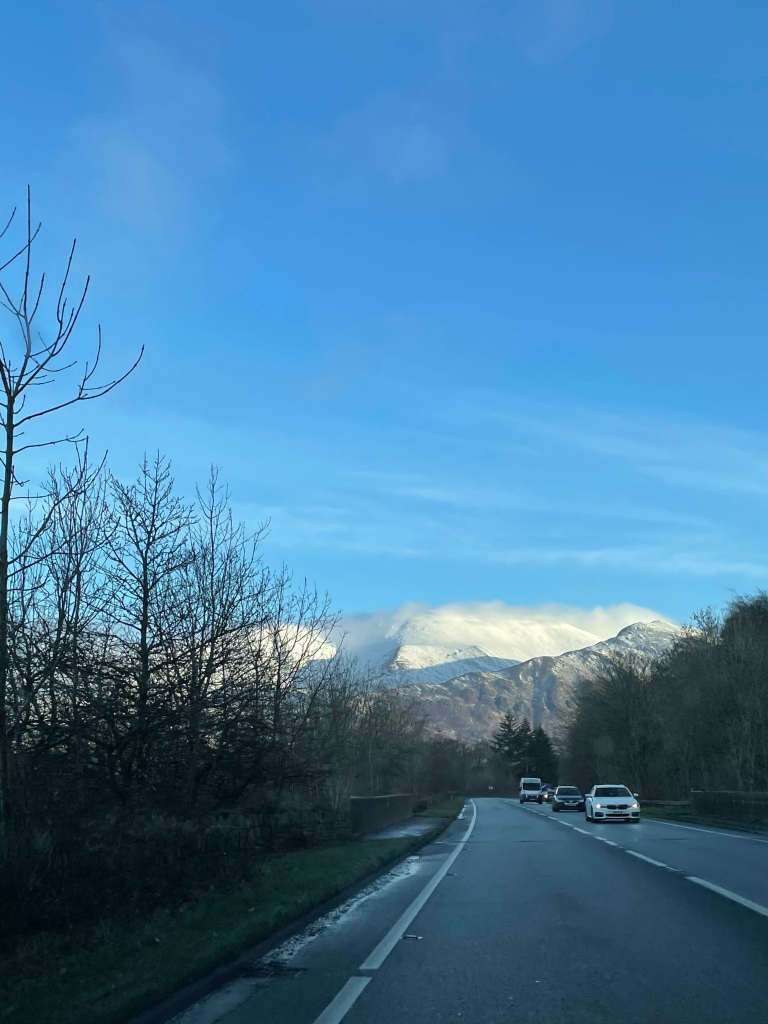
Returning from getting my Covid vaccination a few days ago I saw light at the end of the tunnel

On Monday we will find out the plans for easing us out of the current lockdown. Hopefully hospitality will open up soon and we can all get back to the “new” normal

It’s been a while since I have updated this blog, but after a year like no other in the Lake District it feels like a good time to get down in writing and photographs what 2020 in the Lake District was like. Coronavirus was a term that was rumbling around in the news at the beginning of the year. Christmas with family had been and gone. Runners doing the Boxing Day run up Wansfell enjoyed fresh air and exercise and to be honest a Global Pandemic seemed a world away.
 Wansfell Race 2019 Ambleside
Little did we realise how much sporting events would be affected. Organisers of famous Lake District Traditional Events had to make hard decisions whether to cancel events well into the Summer. Grasmere Sports and Show didn’t take place, the only time this had happened previously was during two world wars.

On a personal note I had been working hard to get art work completed to display at National Trust Allan Bank a former home of William Wordsworth. In this the year of his 250th anniversary. So many events planned round this including the reopening of Dove Cottage and the Wordsworth museum. None of which happened at the time

Lockdown arrived in March and everything closed. What is normally the start of the busy tourist season in the Lake District never happened. Hospitals were filling and the pandemic was getting worse.

I had to stay in Windermere to look after an elderly member of the family and took photos of an eerily quiet village. The main road usually so full of coaches with visitors from overseas remained empty. Only essential shops were open and apart from a walk for exercise people stayed at home.

Signs thanking the NHS started appearing on doors and gates. We stood on the doorstep on Thursday evenings and clapped to say thank you.


One blessing was the weather. The sun shone day after day, however you couldn’t help thinking how annoying visitors couldn’t arrive when Easter was warm and sunny instead of the usual wet weekend!

Gradually lockdown ended but a new normal was about to start.


Queueing at a distance, limited numbers in shops, hand sanitiser and wearing a mask are all the new normal as we slowly adjust to lockdown ending. As I write this we have just ended a second lockdown, and most importantly of all a vaccine has started to be rolled out this week. We are certainly not through this yet but there is more than a glimmer of hope in sight.
It’s to be hoped Christmas is enjoyed in a sensible way and hospitals aren’t overwhelmed over the busy Winter period. I’m typing this with a broken hand so have recently seen first hand (literally) the wonderful work our NHS is doing. Wishing all blog readers a happy festive season but especially a happy and healthy 2021.
I will finish with a few more images from across the Lake District this year.


And that’s my final message. Here’s to a busy and thriving tourism industry again in the Lake District next year.
Time has flown and another year of having no time to write my blog. We are now a UNESCO World Heritage Site. I have still had time to take lots of photographs so I would like to share what I have taken in 2018. Here is a quick trip round the region.

Brantwood Coniston

Brantwood Coniston

Snowy Ambleside

Stockghyll Ambleside

Towards Keswick from Thirlmere

Spring Arriving

Woodpecker in the garden

Path to Wansfell and Troutbeck

Stockghyll Vale Ambleside

Low wood Ambleside

Fritillaria Grasmere

Mile Marker

Spring is here

Cherry Blossom Grasmere

Grasmere

Printfest Ulverston

Panikatak Final Concert

Grasmere Bluebells

Helm Crag Grasmere

Heron Corn Mill

Swarthmoor Hall

Larch Cottage Penrith

Ambleside Rushbearing

Ambleside Rushbearing

Potfest in the Pens

Grasmere Sports

Grasmere Sports

Lakes Alive Kendal

Art Heysham

Art Heysham

Save Grange Lido

Lido Grange over Sands

Art Birkrigg Common

Summer

Rutter Force Appleby

Rutter Force Appleby

Ford Rutter Force

Carlisle Castle

Carlisle Castle

St Andrews Day Barrow

Bassenthwaite Lake

Blackwell Christmas

Blackwell Windermere

Windermere Grinch
It is easy to forget the obvious sometimes, and it was only because I had visitors staying who wanted a quick and simple walk with views, that I realised that I hadn’t written about Orrest Head.

View from Orrest Head
One of the claims to fame that Orrest Head has is that it is the subject of a chapter in Wainwright‘s The Outlying Fells of Lakeland, and the first fell he climbed. He describes it thus “our first ascent in Lakeland, our first sight of mountains in tumultuous array across glittering waters, our awakening to beauty” and also as “a fitting finale, too, to a life made happy by fellwandering”.

Orrest Head Sign
Access to Orrest Head is just near Windermere Railway station and across the A591 via the pedestrian crossing where you will see this sign. Both the woods you approach through (Elleray Woods), and Orrest Head are managed by Windermere Town Council and you may find a leaflet at the start of the walk which they produce. It gives a handy guide to wildlife you might spot on your way to the viewpoint. The wood covers an area of approximately 18 acres and was probably laid out in the 19th century. The area was originally owned by Arthur Henry Heywood and in 1902 his widow and daughter gave Orrest Head in trust to Windermere Urban District Council to be held for “public walks or pleasure grounds”.

Board with Map
It is an easy walk on a metalled road to start with, then through the woods. At a leisurely pace about half an hour to the top. It is a busy little walk and when you reach the top you will find a stunning view of Windermere in all it’s glory.

Orrest Head View
Don’t forget to look behind you too.

View from the top
Wondering what you are looking at? There is a handy guide to the surrounding fells.

Windermere and High Fells
So if you have some spare time in Windermere I can highly recommend taking a detour to Orrest Head. Lots of view for little effort.

Panorama Orrest View
One of these Summer days where you wake up and need an excuse to explore. It is raspberry time so I decided to find somewhere to pick my own rasps in Cumbria. A quick google brought up Rowley’s Raspberries in the Eden Valley. Great not been over that way for a while and a good excuse to visit Little Salkeld Watermill cafe which had changed hands since I was last there.

Little Salkeld Watermill
Little Salkeld Watermill is an 18th Century watermill built in 1745 and houses an organic vegetarian cafe as well as producing flour.

Little Salkeld Menu
Situated near the stone circle, Long Meg and her Daughters this cafe was always a good stop off after a walk. I have written about both before.
https://englishlakes.wordpress.com/2011/03/10/little-salkeld-long-meg/

Home made bread
I was pleased to see the menu was still featuring homemade bread made with the flour from the mill. This was the selection I got with my delicious homemade soup. There is also a large selection of flour produced at the mill to buy.

Flour Mill Tours
Self guided tours of the Mill were available for £2 adults £1 children.

Little Salkeld Watermill
The mill has ample parking at the back with chickens running around and the mill race.

Back of Little Salkeld Mill
Back to the matter at hand, time to pick some raspberries. The berry fields were situated just round the corner.

Raspberry ready to pick
With a plentiful supply it didn’t take long to pick a large supply

Raspberry field Rowley Estate
Home and jam made, a productive day in every way.

Homemade Raspberry Jam
Well that is 2015 nearly gone. A year of challenges for many in Cumbria who have had to move out of flooded homes. Storms started to have names this year in the UK which has been slightly irritating. Frank has just been and gone causing more anxiety. Let’s hope for a gentler start to the new year.
MY 2015 YEAR.
JANUARY

Cold and crisp days
A more seasonal start to the year. Heading in to Keswick from Penrith on the way home (won’t be happening soon, as the A591 now has a Gap in it at the side of Thirlmere and it could take months to repair). It is the long way round now.
FEBRUARY

Snowy Stockghyll Lane
Crisp clear days in February.
MARCH

Derwentwater
Coming out of hibernation and visitors are starting to appear in the Lake District. Time for a visit to one of my favourite Lake District places. The Duddon Valley.

Duddon Valley
Not a soul about. Perfect.
APRIL

Langdale Herdwicks
A trip over Hardknott and Wrynose Pass is always a must before Summer really gets going.

Waterfalls Ambleside
Daffodils which the Lake District is renown for on the way to Stockghyll Falls Ambleside.
MAY

Larch Cottage Nurseries
Time to buy some plants. Always a pleasure at Larch Cottage Nurseries. A delight to wander around with some really unusual items in the nursery and the shop.

Kings Head Thirlspot
Blue sky at the end of May. This little beer garden is hidden away on the A591 (again on the other side of the “gap”) as I write this it is becoming apparent that until the road is fixed this blog will get very South Lakeland orientated. Sorry North Lakes I will make up for it as soon as I can!
JUNE

Open Farm Sunday
June brought Open Farm Sunday, a good excuse to visit Sizergh Farm and shop. Brilliant Cafe too.

Distance over Sands
Spotted this marker stone in Cartmel showing the distance if you travelled over the Sands. Not something recommended without a guide.
JULY

Outdoor Theatre Blackwell
The weather in July made for a very pleasant theatre outing to Blackwell Arts and Crafts House.

Chillifest Dalemain
Love Chillis, Love Chillifest. Stocked up on everything Chilli in July.
AUGUST

Sawmill Finsthwaite
Interesting visit to the Bobbin Mill at Finsthwaite. Fascinating part of Lakeland heritage.

Brougham Castle
Brougham Castle near Penrith with it’s workshops and cafe is always a popular stop off.
SEPTEMBER

Lanercost Priory
September quite often brings great lighting like this at Lanercost Priory.

View from Hardknott Fort
And the view from Hardknott Fort is always worth a look.
OCTOBER

Bassenthwaite
Great view on the way to Siskins cafe at Whinlatter.

Lowther Castle
Hadn’t been to Lowther Castle for ages. Was great to see the work which had been done on the building and the grounds.

Dalek Kendal Town
An unusual sighting of a Dalek in Kendal. Comicfest at it’s best.

Autumn Colours Isle Bridge
September colours.
NOVEMBER

Flooding Ullswater
November brought stormy weather and when I went past Ullswater it was well over the road.

Grasmere Flooding
Grasmere started to flood too in places it had never flooded before.
DECEMBER

Misty Morning Grasmere
Early morning in December in Grasmere.
So that is my round up of a Lake District year. The bells are about to ring heralding the New Year. Here’s to a great 2016.

Ambleside Fireworks
Happy New Year to everyone.
Well after a sustained spell of wet weather and flooding, the temperature plummeted and the morning of Ambleside Lantern Parade dawned crisp, bright and sunny. The village was buzzing all day as people sipped mulled wine, ate mince pies, did a bit of Christmas shopping and waited for the main event later in the day.

Ice skating Ambleside
The children, and some adults too, had a great time at the pop up ice rink down by the school.

Fun for all
Even if you didn’t have a lantern for the parade you could still light things up with a neon novelty.
Reindeers and Father Christmas led the procession, then came the lanterns in all shapes and sizes.

Here come the Lanterns
They wended their way through the village

Heading through the village
Every shape and size imaginable.

Ambleside Lantern Parade
Young and old held their lanterns high as they reached the Market Place.

Ambleside Lanterns
Father Christmas switched on the Christmas Lights as he passed and the village became ablaze with lights.

Ambleside Celebrates Christmas
My favourite lantern was a herdwick sheep one.

Herdwick Lantern

Ambleside Celebrates Christmas
Round the village they paraded then down through the churchyard to the park.

Ambleside Church
The park filled up with happy lantern bearers, villagers and visitors for the finale of the day. Fireworks on a perfect clear evening.

Ambleside Lanterns
Lantern poles were stuck in the ground while we waited.

Tractor Lantern
The fireworks started slowly.

Fireworks in Ambleside
All of a sudden we were surrounded by a riot of noise and colour. What a finale to a perfect day.

Ambleside Fireworks Finale
Congratulations to all involved in such a great event. Lots of time and hard work much appreciated judging by the comments all around.
http://www.amblesidechristmaslights.co.uk if you fancy visiting next year.
One of the delights of living in the Lake District is being able to head out early in the morning and enjoy the tranquility of the area before no one is about. It was one such morning last week, time before work to go for a quick row on Grasmere.

Early morning colour Grasmere
Only the ducks for company.

Grasmere Ducks
Reflections on the lake are always beautiful but especially so at the start of the day, however the mere was a bit choppy. It was going to be a warm day, so a breeze was welcome.

Towards Helm Crag
Allan Bank the National Trust property was standing out proudly at the head of the valley.

Heading back to shore
Love the lily pads on the lake.

Rowing on Grasmere
Fairyland rowing boats always give a splash of colour any time of the day.

Faeryland Grasmere
So back in to the village. Was tempted to head in to the Grand @ Grasmere for breakfast it looked so inviting in the early morning sunshine.

Grand at Grasmere
The centre of the village was still silent, preparing for the visitors to arrive, although the aroma of Grasmere Gingerbread was already in the air. Another busy day in Grasmere ahead.

Church Stile Grasmere
Sometimes it pays to wander “over the border” to Lancashire. Many places are an easy day trip from the Lake District. As I had business in Lancaster I thought I would google “What’s on in Lancaster” before heading out. I am so glad I did. I spotted that there was a Scarecrow Festival in the village of Wray.

Village Street Wray

Happy Faces

Wray Scarecrow

Wray Scarecrows
Wray village is situated in the Lune Valley and is an interesting little village with many buildings from the 17th and 18th Century.

Church Scarecrow
I was lucky enough to find a space in the church carpark. Put some money in the honesty box at the gate and headed in to the village. Local farmers do open their fields for parking. Usually £1.50 so don’t be worried about visiting.

On my Wray Home
Remember to look all around. This scarecrow was perched high above.

Mrs Brown
And make sure you even look inside cars!

Scary Scarecrow
Wray used to be a village that produced hats, nails and bobbins. It is a lovely little village with a general store, Post Office and pub the George and Dragon. Everyone had taken part in the festival.

Scarecrow outside the pub

Post Office Scarecrow
The Locals seemed to be taking everything in their stride.

Local Resident
As well as the Scarecrow Festival which runs until the 4th of May there is a car boot sale, Vintage Market, and Fun Fair.

School Scarecrows
The school had made little scarecrows for sale. A bargain at £4 and a nice souvenir of the event.

50 Shades of Wray
Loved this “Ideal husband” scarecrow especially the wife reading “50 Shades of Wray”!

Rapunzel Scarecrow
For more information about the Village of Wray http://www.Wrayvillage.co.uk and another interesting website http://www.Vrwray.com I will leave you with a few more images. A great day out from Cumbria.

Wray Scarecrow

Watch Out. Speed Camera

Sheepy Scarecrow

Lovely Village
A Lovely Village and a great Festival. Well done to all involved.
A brief wander up the Stockghyll Valley last night, and Autumn is well and truly on it’s way. After a beautiful Summer with nearly no rain at at all, the morning brought a torrential downpour. The flowers in the garden truly flattened after putting on a fantastic show all Summer. and then came the evening. A brief moment of total enjoyment.

Stockghyll Valley Ambleside
After a busy day at work due to the downpour it was pure pleasure to be able to have a brief walk before it got dark. As the saying goes, nights are drawing in.

Autumn Berries
Blue sky had appeared, no one around. Time to think.

Evening Light Ambleside
Then the light started fading behind the Langdale Pikes.

Evening Ambleside
Time to head home and make the tea. Grateful to live in such a beautiful place come rain or shine!.

End of the Day Ambleside
And a mental note that it is time to start carrying a torch again night closes in quickly at this time of year.
 Lake District Life